
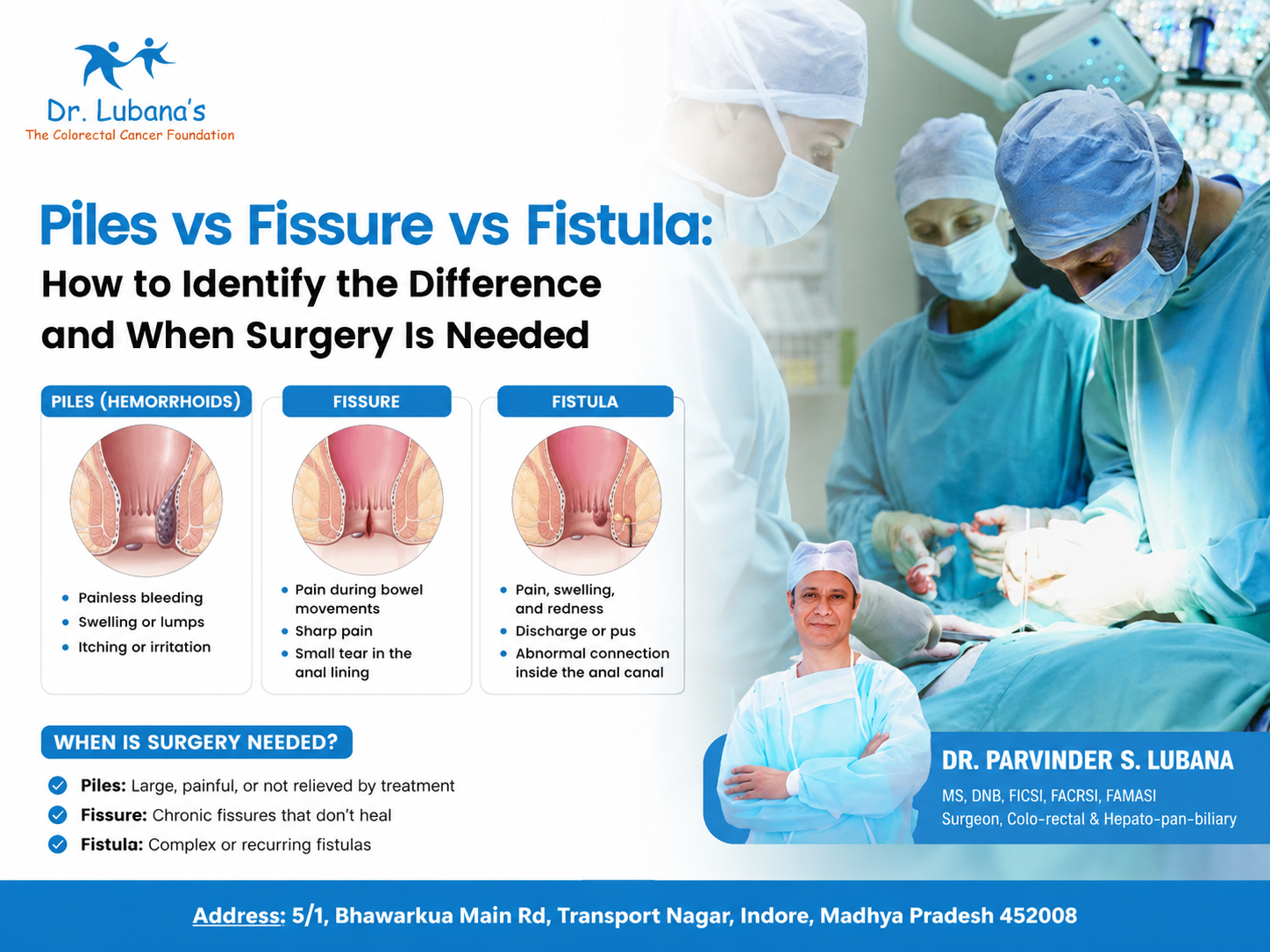
Many people experience pain, bleeding, or discomfort around the anal region but often assume it is simply piles. In reality, these symptoms may also be caused by an anal fissure or fistula. Although these conditions affect the same area, they have different causes, symptoms, and treatment approaches. Understanding the difference is essential because delaying proper diagnosis can lead to worsening symptoms and complications.
If you are searching for Piles Treatment in Indore, it is important to know that not every case of rectal pain or bleeding is caused by hemorrhoids. Consulting an experienced colorectal surgeon helps identify the exact condition and ensures the most effective treatment.
At Apple Hospital, Dr. Parvinder S. Lubana, a highly experienced Gastrointestinal, Colorectal, and Hepato-Pan-Biliary Surgeon in Indore, specializes in diagnosing and treating piles, fissures, fistulas, and other colorectal disorders. With more than 30 years of surgical experience and over 40,000 successful surgeries, he provides advanced, minimally invasive treatment options that promote faster recovery and better long-term outcomes.
What Are Piles?
Piles, also known as hemorrhoids, are swollen and enlarged veins located inside or around the anus and lower rectum. They develop due to increased pressure in the rectal veins and are one of the most common causes of rectal bleeding.
Common Causes of Piles
- Chronic constipation
- Straining during bowel movements
- Low-fiber diet
- Pregnancy
- Obesity
- Sitting for long periods
- Aging
Common Symptoms of Piles
- Bright red bleeding during bowel movements
- Itching around the anus
- Swelling or lumps near the anal opening
- Pain while sitting
- Mucus discharge
- Feeling of incomplete bowel emptying
Mild piles often improve with dietary changes, medications, and lifestyle modifications. However, advanced or prolapsed piles may require Piles Treatment in Indore using minimally invasive surgical techniques for permanent relief.
What Is an Anal Fissure?
An anal fissure is a small tear in the lining of the anal canal. Unlike piles, a fissure usually causes sharp pain during and after passing stools because the tear exposes sensitive tissues.
Common Causes of Anal Fissure
- Passing hard stools
- Severe constipation
- Chronic diarrhea
- Childbirth
- Excessive straining
Symptoms of Anal Fissure
- Severe pain during bowel movements
- Burning sensation after passing stool
- Small amount of bright red blood on toilet paper
- Visible crack near the anus
- Muscle spasms around the anal opening
Most acute fissures heal with medication, stool softeners, and dietary improvements. Chronic fissures that fail to heal may require a minor surgical procedure for long-term relief.
What Is an Anal Fistula?
An anal fistula is an abnormal tunnel that forms between the anal canal and the skin surrounding the anus. It usually develops after an anal abscess or infection and rarely heals without surgical treatment.
Unlike piles or fissures, fistulas often cause repeated infections, pus discharge, and persistent discomfort.
Common Causes of Anal Fistula
- Anal abscess
- Infection of anal glands
- Crohn’s disease
- Tuberculosis (rare)
- Previous anal surgery
- Trauma around the anal region
Symptoms of Anal Fistula
- Continuous pus discharge
- Swelling around the anus
- Pain while sitting
- Recurrent infections
- Fever in infected cases
- Bad-smelling discharge
- Skin irritation around the anus
Since fistulas generally do not heal on their own, surgical treatment is usually recommended to prevent recurrent infections and complications.
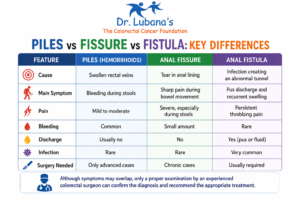
Piles vs Fissure vs Fistula: Key Differences
Many people confuse piles, fissures, and fistulas because they all affect the anal region. However, they are very different conditions and require different treatments. Understanding these differences helps patients seek the right Piles Treatment in Indore or other colorectal treatment before complications develop.
| Feature | Piles (Hemorrhoids) | Anal Fissure | Anal Fistula |
|---|---|---|---|
| Cause | Swollen rectal veins | Tear in anal lining | Infection creating an abnormal tunnel |
| Main Symptom | Bleeding during stools | Sharp pain during bowel movement | Pus discharge and recurrent swelling |
| Pain | Mild to moderate | Severe, especially during stools | Persistent throbbing pain |
| Bleeding | Common | Small amount | Rare |
| Discharge | Usually no | No | Yes (pus or fluid) |
| Infection | Rare | Rare | Very common |
| Surgery Needed | Only advanced cases | Chronic cases | Usually required |
Although symptoms may overlap, only a proper examination by an experienced colorectal surgeon can confirm the diagnosis and recommend the appropriate treatment.
How Are Piles, Fissures, and Fistulas Diagnosed?
Early diagnosis helps prevent unnecessary pain and complications. During your consultation, the surgeon carefully reviews your symptoms, medical history, and bowel habits before performing a physical examination.
Depending on the condition, investigations may include:
- Clinical examination
- Digital rectal examination
- Proctoscopy
- Anoscopy
- Colonoscopy (when indicated)
- MRI for complex fistulas
- Blood investigations if infection is suspected
At Apple Hospital, Dr. Parvinder S. Lubana uses advanced diagnostic techniques to accurately identify the condition and recommend the most suitable Piles Treatment in Indore or colorectal surgery when necessary.
When Is Surgery Needed for Piles, Fissures, or Fistulas?
Not every patient requires surgery. Many mild cases improve with medicines, dietary changes, and lifestyle modifications. However, surgery becomes necessary when symptoms are severe, recurrent, or fail to improve with conservative treatment.
Surgery for Piles May Be Recommended If:
- Bleeding occurs repeatedly
- Large prolapsed piles develop
- Severe pain affects daily activities
- Medical treatment fails
- Frequent recurrence occurs
Modern minimally invasive procedures such as laser surgery, stapler surgery, and advanced hemorrhoidectomy provide faster recovery with less postoperative discomfort.
Surgery for Anal Fissure May Be Needed If:
- Symptoms continue for more than 6–8 weeks
- Medicines do not provide relief
- Chronic fissure develops
- Recurrent pain affects quality of life
A procedure called Lateral Internal Sphincterotomy (LIS) is commonly performed and offers excellent long-term results for chronic fissures.
Surgery for Anal Fistula Is Usually Necessary
Unlike piles or fissures, fistulas rarely heal without surgery because the infected tract remains inside the tissues.
Treatment options may include:
- Fistulotomy
- Seton placement
- Laser fistula treatment
- VAAFT (Video-Assisted Anal Fistula Treatment)
- LIFT procedure in selected patients
Early surgical treatment helps prevent repeated infections and protects the surrounding muscles.
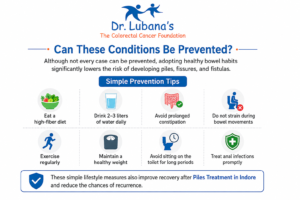
Can These Conditions Be Prevented?
Although not every case can be prevented, adopting healthy bowel habits significantly lowers the risk of developing piles, fissures, and fistulas.
Simple Prevention Tips
- Eat a high-fiber diet
- Drink 2–3 liters of water daily
- Avoid prolonged constipation
- Do not strain during bowel movements
- Exercise regularly
- Maintain a healthy weight
- Avoid sitting on the toilet for long periods
- Treat anal infections promptly
These simple lifestyle measures also improve recovery after Piles Treatment in Indore and reduce the chances of recurrence.
Why Choose Dr. Parvinder S. Lubana for Piles Treatment in Indore?
When it comes to colorectal disorders, choosing an experienced surgeon plays a vital role in achieving the best treatment outcomes. Dr. Parvinder S. Lubana is one of the leading gastrointestinal and colorectal surgeons, providing advanced Piles Treatment in Indore with a strong focus on accurate diagnosis, patient comfort, and long-term relief.
With over 30 years of surgical experience and more than 40,000 successful surgeries, Dr. Lubana has extensive expertise in treating piles, anal fissures, anal fistulas, colorectal diseases, and other gastrointestinal disorders. He specializes in modern minimally invasive surgical techniques that help reduce pain, minimize hospital stay, and promote faster recovery.
At Apple Hospital, every patient undergoes a thorough evaluation to determine the exact cause of symptoms before recommending the most appropriate treatment plan. Whether the condition requires medications, lifestyle modifications, or surgery, the focus always remains on safe, evidence-based, and personalized care.
Frequently Asked Questions (FAQs) About Piles Treatment in Indore
Can piles, fissures, and fistulas occur together?
Yes. Although they are separate conditions, some patients may develop more than one anorectal disorder at the same time. Proper examination is necessary for an accurate diagnosis.
How can I know whether I have piles or a fissure?
Piles usually cause painless bleeding or swelling, whereas fissures typically cause severe pain during bowel movements along with slight bleeding. A colorectal surgeon can confirm the diagnosis after examination.
Does every patient with piles require surgery?
No. Early-stage piles often respond well to medicines, dietary changes, and lifestyle modifications. Surgery is usually recommended only for advanced, prolapsed, or recurrent piles that do not improve with conservative treatment.
Can an anal fistula heal without surgery?
In most cases, no. Anal fistulas generally require surgical treatment because the infected tract rarely closes on its own. Delaying treatment may increase the risk of recurrent infections.
How long does recovery take after Piles Treatment in Indore?
Recovery depends on the type of procedure performed. Most patients undergoing minimally invasive or laser procedures recover within a few days and can return to normal activities much sooner than with conventional surgery.
How can I reduce the risk of developing piles again?
Eating a high-fiber diet, drinking enough water, avoiding constipation, exercising regularly, and not straining during bowel movements can significantly reduce the risk of recurrence after Piles Treatment in Indore.
Conclusion – Piles Treatment in Indore
Although piles, anal fissures, and anal fistulas affect the same region of the body, they are different medical conditions with distinct causes, symptoms, and treatment approaches. Ignoring persistent pain, bleeding, swelling, or pus discharge can delay diagnosis and increase the risk of complications.
Early consultation with an experienced colorectal surgeon ensures an accurate diagnosis and timely treatment. Whether you need medication, lifestyle guidance, or advanced minimally invasive surgery, receiving the right care at the right time can provide lasting relief and improve your quality of life.
If you are experiencing symptoms such as rectal bleeding, severe pain during bowel movements, persistent swelling, or recurrent infections, seeking expert Piles Treatment in Indore can help prevent complications and restore your digestive health.