
A Gastrointestinal Surgeon in Indore evaluates and treats conditions affecting the digestive system, including the stomach, small intestine, large intestine, colon, rectum, liver, pancreas, and other abdominal organs. Intestinal obstruction is one such condition in which the normal movement of food, fluids, digestive secretions, or gas through the intestine becomes partially or completely blocked. Depending on the cause and severity, intestinal obstruction may require observation, medical management, endoscopic treatment, or surgery.
People experiencing intestinal blockage may develop symptoms such as abdominal pain, bloating, vomiting, constipation, inability to pass gas, or changes in bowel movements. A GI Surgeon in Indore may evaluate these symptoms to determine whether the obstruction is caused by scar tissue, hernia, tumor, twisting of the intestine, inflammation, or another gastrointestinal condition. Early assessment is important because a severe obstruction can affect the blood supply to the intestine and may result in complications if treatment is delayed.
Dr. P. S. Lubana is a gastrointestinal, colorectal, hepato-pancreato-biliary, cancer, laparoscopic, and minimally invasive surgeon in Indore. His surgical practice includes gastrointestinal and colorectal conditions and various laparoscopic and minimally invasive procedures.
What Is Intestinal Obstruction and How Is It Treated?
Intestinal obstruction occurs when the normal passage through part of the intestine becomes blocked. The blockage can be partial, allowing some contents to pass, or complete, preventing normal passage.
The small intestine is responsible for much of the digestion and absorption of nutrients, while the large intestine helps absorb water and forms stool. A blockage in either area can interfere with normal digestive function.
An Intestinal Obstruction Specialist in Indore may evaluate the location, cause, severity, and duration of the obstruction before determining the appropriate treatment.
What Are the Common Causes of Intestinal Obstruction?
Several conditions can cause intestinal blockage. The cause may differ between individuals, and previous abdominal surgery is an important risk factor in adults.
Common causes include:
- Abdominal adhesions
- Hernias
- Tumors
- Colorectal cancer
- Intestinal twisting
- Inflammatory bowel conditions
- Intestinal narrowing
- Impacted stool
- Certain congenital abnormalities
- Foreign bodies in selected situations
Abdominal adhesions are bands of scar tissue that can develop after surgery or inflammation and may cause the intestine to become kinked or compressed.
A Bowel Obstruction Treatment in Indore evaluation may therefore involve reviewing previous surgeries, medical conditions, bowel symptoms, and imaging findings.
What Are the Symptoms of Intestinal Obstruction?
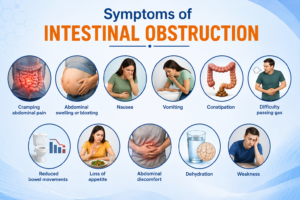
The symptoms of intestinal obstruction can vary depending on whether the blockage is partial or complete and where it is located.
Common symptoms include:
- Cramping abdominal pain
- Abdominal swelling or bloating
- Nausea
- Vomiting
- Constipation
- Difficulty passing gas
- Reduced bowel movements
- Loss of appetite
- Abdominal discomfort
- Dehydration
- Weakness
Pain may come and go in waves, particularly when the intestine attempts to move its contents past the obstruction.
Patients experiencing persistent abdominal pain with vomiting, severe bloating, or inability to pass stool or gas should receive timely medical evaluation by an appropriate Gastrointestinal Surgeon in Indore.
When Is Intestinal Obstruction an Emergency?
An intestinal blockage can sometimes become a surgical emergency, particularly when the blood supply to the affected bowel is compromised.
Warning signs that require urgent medical attention include:
- Severe or worsening abdominal pain
- Persistent vomiting
- Increasing abdominal swelling
- Inability to pass stool and gas
- Fever
- Rapid heart rate
- Significant weakness
- Signs of dehydration
- Blood in stool
- Severe abdominal tenderness
- Sudden deterioration of symptoms
Intestinal Obstruction Surgery in Indore may become necessary when there is complete obstruction, bowel damage, perforation, strangulation, or another condition that cannot be safely managed with conservative treatment.
What Is Small Bowel Obstruction?
A small bowel obstruction occurs when the passage of contents through the small intestine becomes blocked.
Common causes include postoperative adhesions, hernias, tumors, inflammatory conditions, and twisting of the intestine.
Symptoms may include abdominal cramps, vomiting, bloating, and difficulty passing gas or stool. Vomiting can sometimes occur earlier in small bowel obstruction compared with obstruction involving the large intestine.
Small Bowel Obstruction Treatment in Indore depends on the cause, severity, and whether there are signs of compromised bowel function.
What Is Large Bowel Obstruction?
A large bowel obstruction affects the colon and prevents normal movement of intestinal contents toward the rectum.
Potential causes include colorectal tumors, narrowing of the colon, twisting of the bowel, inflammatory conditions, and other structural abnormalities.
Patients may experience pronounced abdominal distension, constipation, inability to pass gas, abdominal pain, and sometimes vomiting.
A Colorectal Surgeon in Indore may evaluate suspected large bowel obstruction and determine whether additional imaging, endoscopic assessment, or surgery is appropriate.
Can Colorectal Cancer Cause Intestinal Obstruction?
Yes. A tumor in the colon or rectum can narrow the intestinal passage and interfere with the movement of stool. A Colorectal Cancer Surgeon in Indore may evaluate patients when imaging or other investigations suggest a colorectal tumor causing obstruction or another bowel problem.
The appropriate treatment depends on the tumor location, stage, overall health, and whether emergency treatment is required.
Symptoms associated with colorectal cancer may include:
- Changes in bowel habits
- Blood in stool
- Unexplained weight loss
- Persistent abdominal discomfort
- Narrow stools
- Constipation
- Diarrhea
- Fatigue
- Symptoms of intestinal obstruction
Can Hernia Cause Intestinal Obstruction?
A hernia occurs when an internal organ or tissue pushes through a weakened area of the surrounding muscle or connective tissue. In some cases, a portion of the intestine can become trapped inside the hernia.
If the bowel becomes compressed, its movement can be obstructed. If blood supply is also affected, the condition can become serious.
A Hernia Surgeon in Indore may assess a painful or irreducible hernia, particularly when it is associated with vomiting, abdominal swelling, constipation, or inability to pass gas.
Prompt assessment is important when a hernia is associated with symptoms of bowel obstruction.
How Is Intestinal Obstruction Diagnosed?
Diagnosis begins with a detailed medical history and physical examination. The surgeon may ask about:
- Duration of symptoms
- Location of abdominal pain
- Vomiting
- Bowel movements
- Ability to pass gas
- Previous abdominal surgery
- Previous hernia
- Weight loss
- Previous gastrointestinal disease
- Cancer history
- Medication use
The abdomen may be examined for swelling, tenderness, bowel sounds, or other signs.
A Gastrointestinal Surgeon in Indore may recommend imaging and laboratory investigations depending on the suspected cause and severity of symptoms.
What Tests Are Used for Intestinal Obstruction?
Different investigations can help identify an intestinal blockage and determine its possible cause.
Tests may include:
- Abdominal X-ray
- Ultrasound in selected cases
- CT scan
- Blood tests
- Contrast studies in selected situations
- Colonoscopy in appropriate cases
CT imaging can provide detailed information about the location and cause of obstruction and may help identify complications such as bowel inflammation, perforation, or reduced blood supply.
The choice of investigation depends on the patient’s symptoms, clinical condition, and suspected diagnosis.
What Is the Treatment for Intestinal Obstruction?
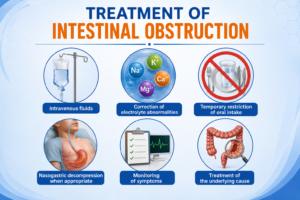
Treatment depends on whether the obstruction is partial or complete and what caused it. In selected patients, initial management may include:
- Intravenous fluids
- Correction of electrolyte abnormalities
- Temporary restriction of oral intake
- Nasogastric decompression when appropriate
- Monitoring of symptoms
- Treatment of the underlying cause
Some partial obstructions may improve with conservative management under medical supervision.
However, surgery may be necessary when the obstruction does not resolve, when there is complete blockage, or when complications are suspected.
A Gastrointestinal Surgeon in Indore can determine the most appropriate treatment approach after evaluating the obstruction and its underlying cause.
When Is Intestinal Obstruction Surgery Required?
Intestinal Obstruction Surgery in Indore may be considered when there is a mechanical blockage that cannot be safely resolved through conservative treatment.
Surgery may be required in situations involving:
- Complete obstruction
- Strangulated bowel
- Bowel ischemia
- Perforation
- Tumor-related obstruction
- Severe adhesions
- Intestinal twisting
- Complications that threaten bowel health
The exact surgical procedure depends on the cause and location of the obstruction.
In some cases, the surgeon may release adhesions or repair a hernia. In other situations, a damaged or diseased segment of intestine may need to be removed.
What Is Laparoscopic Surgery for Intestinal Obstruction?
Laparoscopic surgery uses small abdominal incisions through which specialized instruments and a camera are inserted.
A Laparoscopic Surgeon in Indore may consider minimally invasive surgery in selected patients depending on the cause of obstruction, previous surgeries, severity of the condition, and overall health.
Potential advantages of laparoscopic surgery in suitable cases may include smaller incisions and potentially faster recovery compared with some open procedures.
However, laparoscopic surgery is not appropriate for every intestinal obstruction. Severe obstruction, extensive adhesions, perforation, or unstable patients may require open surgery.
What Is Adhesion-Related Bowel Obstruction?
Adhesions are bands of scar tissue that can develop inside the abdomen after surgery, infection, inflammation, or injury.
They may attach intestinal loops to one another or to other abdominal structures. In some cases, this can cause the intestine to bend or become narrowed.
Patients with previous abdominal surgery who develop recurrent abdominal pain, bloating, vomiting, or constipation may require evaluation for adhesive obstruction.
An Abdominal Surgeon in Indore may consider surgical treatment when an
adhesion-related obstruction does not resolve with appropriate conservative management or when complications develop.
Can Intestinal Obstruction Be Prevented?
Not every intestinal obstruction can be prevented because some causes are related to previous surgery, tumors, congenital conditions, or other underlying diseases.
However, appropriate management of known gastrointestinal conditions and timely evaluation of persistent abdominal symptoms may help identify problems earlier.
People with a history of abdominal surgery should be aware that adhesions can develop even years later.
Maintaining appropriate medical follow-up for known gastrointestinal disease can also help identify changes that may require further investigation by a GI Specialist in Indore.
What Happens During Recovery After Intestinal Obstruction Surgery?
Recovery depends on the severity of the obstruction, the type of surgery performed, whether bowel resection was necessary, and the patient’s overall health. Food is generally reintroduced gradually according to the patient’s recovery and the surgeon’s recommendations.
After surgery, the medical team may monitor:
- Bowel function
- Pain
- Hydration
- Ability to tolerate food
- Wound healing
- Signs of infection
- Bowel movements
- Abdominal symptoms
Patients should follow instructions regarding activity, wound care, diet, medication, and follow-up.
About Dr. P. S. Lubana – Gastrointestinal and Laparoscopic Surgeon in Indore
Dr. P. S. Lubana is a surgeon specializing in gastrointestinal, colorectal,
hepato-pancreato-biliary, cancer, laparoscopic, and minimally invasive surgery in Indore.
His areas of surgical practice include gastrointestinal and colorectal disorders, abdominal conditions, cancer surgery, and minimally invasive procedures.
As a Gastrointestinal Surgeon in Indore, Dr. P. S. Lubana evaluates patients with different gastrointestinal and abdominal conditions and determines whether medical management, further diagnostic evaluation, minimally invasive surgery, or another surgical approach may be appropriate.
The treatment plan for intestinal obstruction depends on the cause, location, severity, and presence of complications, making individual evaluation important.
Frequently Asked Questions About Intestinal Obstruction
1. What does a Gastrointestinal Surgeon in Indore treat?
A Gastrointestinal Surgeon in Indore treats surgical conditions involving the digestive system, including disorders affecting the stomach, small intestine, colon, rectum, and other abdominal organs.
2. What are the common symptoms of bowel obstruction?
Common symptoms include abdominal pain, bloating, vomiting, constipation, reduced bowel movements, and inability to pass gas.
3. What causes intestinal obstruction?
Common causes include adhesions, hernias, tumors, colorectal cancer, intestinal twisting, inflammatory conditions, and intestinal narrowing.
4. Is intestinal obstruction dangerous?
A severe or untreated obstruction can become dangerous if it causes reduced blood supply, bowel damage, perforation, infection, or other complications.
5. When is Intestinal Obstruction Surgery in Indore required?
Surgery may be required when there is complete obstruction, bowel strangulation, perforation, ischemia, tumor-related obstruction, or failure of appropriate conservative treatment.
6. Can a hernia cause bowel obstruction?
Yes. A hernia can trap a portion of the intestine and interfere with normal bowel movement. If blood supply is compromised, urgent treatment may be necessary.
7. Can colorectal cancer cause intestinal blockage?
Yes. A colorectal tumor can narrow the intestinal passage and may cause symptoms such as constipation, abdominal pain, changes in bowel habits, and obstruction.
8. What is small bowel obstruction?
Small bowel obstruction is a blockage affecting the small intestine. Adhesions and hernias are among its possible causes.
9. What is large bowel obstruction?
Large bowel obstruction affects the colon and may be caused by tumors, twisting, narrowing, inflammatory conditions, or other structural problems.
10. Can intestinal obstruction be treated without surgery?
Some partial obstructions may improve with supervised conservative treatment. However, surgery may be necessary if the blockage persists or complications develop.
11. Is laparoscopic surgery possible for intestinal obstruction?
Laparoscopic surgery may be appropriate for selected patients, depending on the cause, severity, previous operations, and overall condition.
12. Which doctor treats intestinal obstruction?
A gastrointestinal surgeon or general surgeon with appropriate gastrointestinal surgical expertise can evaluate intestinal obstruction and determine whether surgical treatment is required.
Conclusion – Intestinal Obstruction Treatment in Indore
Intestinal obstruction can result from adhesions, hernias, tumors, colorectal cancer, intestinal twisting, inflammation, and other conditions. Symptoms such as persistent abdominal pain, vomiting, increasing abdominal swelling, constipation, and inability to pass gas require appropriate medical evaluation.
Treatment depends on the location and cause of the blockage and may range from supervised conservative management to surgical intervention when complications or complete obstruction are present.
For individuals looking for Gastrointestinal Surgeon in Indore, Laparoscopic Surgeon in Indore, Dr. P. S. Lubana provides surgical care for gastrointestinal and abdominal conditions.